
Executive Summary What This Report Covers: Pokémon Domain Threats Staged in 2026
Date: June 2026
Source: PreCrime™ Labs
Pokémon lookalike domains are fraudulent websites registered to impersonate official Pokémon properties. This includes games, trading card platforms, and merchandise stores. In 2026, BforeAI’s PreCrime Labs threat research team identified 1,352 suspicious domains staged before active campaigns launched, spanning gambling networks, credential harvesting, counterfeit card sales, and cryptocurrency fraud. The majority (85%) were registered between March and May 2026, coinciding with Pokémon’s 30th Anniversary cycle.
Because the Pokémon brand carries immense cultural weight and multi-generational appeal, adversaries exploit it for high-volume consumer scams, credential harvesting, malware delivery (via game clones), and fraudulent trading card market manipulation. Detecting these anomalies in their staging phase allows protective teams to initiate proactive perimeter blocks, brand protection takedowns, and consumer alerts before threat campaigns impact users.
PreCrime™ Preemptive Cybersecurity
Get complimentary access to the Gartner® report: Hype Cycle™ for Security Operations 2026
6 Types of Pokémon Domain Abuse: How Threat Actors Target Fans
Attackers in the gaming sector don’t target corporate infrastructure – they target fan trust. In the Pokémon ecosystem, that means credential harvesting through fake game portals, payment fraud through counterfeit card stores, and financial exploitation through Pokémon-branded investment schemes.
Rather than targeting traditional corporate business units, adversaries within this sector target consumer passions, digital assets, and high-value physical goods. The lookalike domains align into several high-risk tactical threat archetypes.
Distribution of Threat Archetypes
Analysis of the domain permutations highlights a clear distribution of intent across the 1,352 tracked domains:
PreCrime Scenario | Threat Description | Trigger Event / Keyword | Infrastructure Already Staged |
|---|---|---|---|
Pokémon Release-Day Credential Harvesting | Generic Pokémon typosquat domains activated to capture credentials, redirect traffic, distribute surveys, or host fake login portals impersonating official Pokémon services. | New game launches, Pokémon Presents announcements, Nintendo Direct events, seasonal updates, expansion releases. | 671 Generic Brand Typosquats (49.6%) |
Legendary Pokémon Event Phishing | Domains leveraging high-profile Pokémon characters to increase trust and click-through rates among fans, often promoting fake giveaways, exclusive downloads, or limited-time events. | Legendary Pokémon reveals, event distributions, movie releases, anniversary celebrations, rare Pokémon promotions. | 233 Character-Specific Lures (17.2%) |
Merchandise Drop | Fake stores impersonating Pokémon merchandise retailers to steal payment information, conduct advance-payment fraud, or sell counterfeit products. | Holiday shopping seasons, Pokémon Center product launches, convention merchandise drops, limited-edition collectibles. | 161 E-Commerce & Fake Merchandise Domains (11.9%) |
Trading Card Market Manipulation & Grading Scams | Fraudulent platforms targeting collectors through fake card grading services, investment opportunities, marketplace impersonation, and premium card sales. | TCG expansion launches, rare card discoveries, auction events, grading backlog announcements, influencer-driven market hype. | 154 TCG & Card Grading Fraud Domains (11.4%) |
Mobile Game Clone & APK Distribution Campaigns | Domains distributing Trojanized APKs, modified Pokémon applications, fake downloads, cheats. | Pokémon GO updates, mobile game launches, beta releases, APK demand spikes, region-locked feature releases. | 86 Gaming & Mobile/App Clone Domains (6.4%) |
Pokédex Tool & Community Platform Account Theft | Fake Pokédex, IV calculators, team builders, companion tools, and browser extensions used to harvest credentials and compromise player accounts. | New generation releases, Pokédex completions, competitive tournament seasons, community challenge events. | 47 Fan Tools & Pokédex Phishing Domains (3.5%) |
Core Findings & Threat Vectors
1. High-Value Collectible Fraud (TCG & Grading)
With individual Pokémon cards often trading for thousands of dollars, threat actors build fake market infrastructure to exploit collectors and investors. Domains such as pokemoncarddealer[.]com, buypokemoncardsonlines[.]com, and cartespokemon[.]shop attempt to mimic authentic card marketplaces or card-grading services to execute payment card fraud or steal rare inventory through escrow scams.
2. Character-Specific High-Affinity Phishing
Adversaries leverage individual Pokémon names to bypass standard automated spam filters and connect directly with target users. Infrastructure like pikapikachu[.]cards, pikachugacor[.]click, mewtwokingpass[.]net, and mewtwolabs[.]com use high-profile legendary or mascot names to establish rapid community trust, facilitating malware distribution or crypto-drainer link clicks.
3. Trojanized App Clones & Mobile Spoofing
The global success of mobile titles like Pokémon GO makes mobile users highly vulnerable to malicious mobile distribution infrastructure. Staged domains like pokemon-go-hack[.]nl, pokemongomaltamap[.\com, and the pokemonchampionx7game[.]site are configured to look like legitimate community maps, code updates, or custom cheat overlays, but are instead optimized to serve credential-stealing packages or spyware to mobile operating systems.
How Attackers Register Pokémon Lookalike Domains: Registrar & WHOIS Patterns
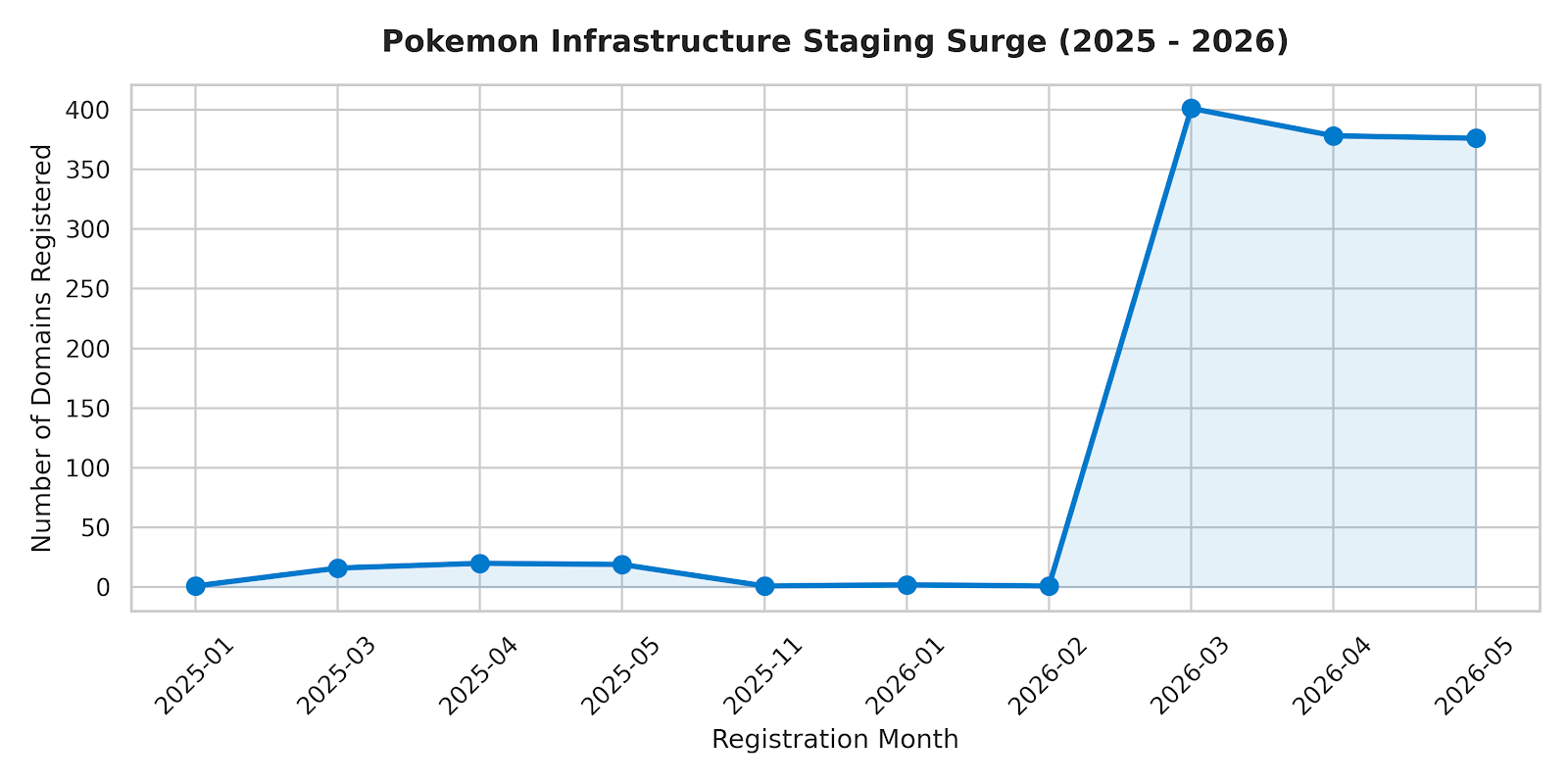
The 2026 Coordinated Registration Surge
Lookalike domains are web addresses deliberately engineered to resemble trusted brands. It differs by one character, a TLD swap, or a character combination. These can be staged weeks or months before a phishing or fraud campaign activates.
A significant operational insight is discovered around the extreme chronological concentration of these domain registrations. While some legacy squatting dates back to 2018, over 85% of all lookalike infrastructure was registered in a tight, massive surge between March and May 2026:
- March 2026: 401 domains registered
- April 2026: 378 domains registered
- May 2026: 376 domains registered
Registrar Analysis
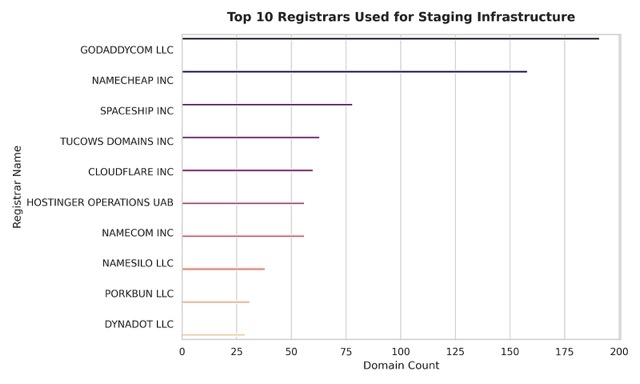
Attackers prefer low-friction, high-volume registrars that facilitate automated setup and support rapid rotation:
- GoDaddy.com LLC (191 domains) and NameCheap Inc (158 domains) lead the charts due to high-speed registration frameworks.
- Spaceship Inc (78 domains) and Cloudflare Inc (60 domains) have seen massive growth in usage among malicious actors for leveraging integrated DNS management and proxy setup tools.
Top-Level Domain (TLD) Preferences
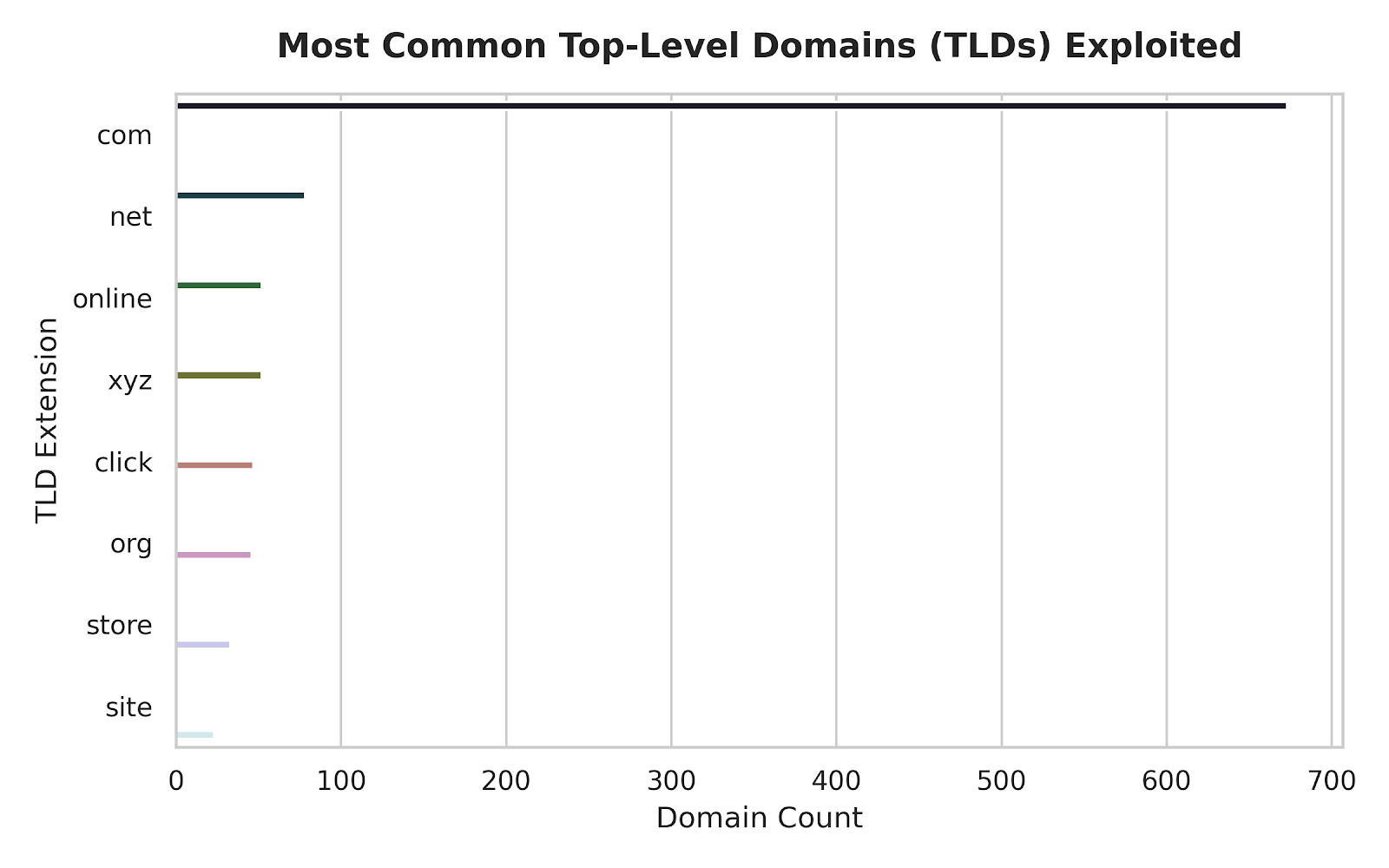
- Attackers balance legacy credibility with cheap alternative extensions. While .com remains the overall favorite (673 domains), generic TLDs like .net (78), .online (52), .xyz (52), and .click (47) are heavily used to host short-lived malicious redirect pages and campaign scripts.
Threat Clusters: Six Distinct Operations Observed
1. The Indonesia Gambling Network using “Pikachu” as a Slot Machine Brand
The single most voluminous threat cluster in this dataset is a large-scale online gambling operation that has systematically hijacked the “Pikachu” character name across more than 170 domains. The operation is centred on Indonesia, a country where online gambling is illegal, driving operators offshore, and uses the globally recognised, child-friendly Pikachu character to lend legitimacy and appeal to illegal gambling platforms.
The operation shows high operational sophistication such as:
- domains follow systematic numbering conventions (pikachu168v1[.]com, pikachu168v2[.]com, pikachu168v3[.]com),
- use the ‘lucky number’ 168 (prosperity in Chinese numerology),
- span multiple TLDs (.com, .net, .xyz, .bet, .live, .sbs, .ink, .info, .world, .life), and
- deploy ‘gacor’ terminology where it stands for traditional Indonesian gambling slang for a slot machine on a hot payout streak.
Another set of domains promoting casino and gambling were observed with Cambodia-based domain registrations (pikachu123[.]vip, pikachu456[.]net, pokemon88[.]asia) suggest operators have split registration jurisdictions to frustrate takedown efforts. This deliberate evasion technique is used by experienced illegal gambling networks. The ‘gacor’ pattern is especially dangerous from a child safety perspective where Pikachu-branded gambling sites can surface in image searches and app stores alongside legitimate Pokémon content.
Sub-Pattern | Example Domains | Threat |
|---|---|---|
Lucky numbers (168, 88, 188) | pikachu168x[.]com, pikachu88[.]live, pikachu188[.]site | Illegal gambling targeting SE Asia consumers |
Gacor slots terminology | pikachugacor[.]click, pikachugacor[.]xyz, pikachugacor[.]sbs | Slot gambling that is illegal in Indonesia |
Pikachu VIP tiers | pikachu123[.]vip, gigantamaxpikachu[.]vip, pikachukoy[.]vip | Premium gambling tier lures |
Character name bets | charizard[.]bet, squirtle[.]bet, pokemon9aus[.]bet, pokemonpg[.]bet | Sports and casino betting disguised as Pokémon |
Toto brand hijack | pokemontoto[.]app, pokemontoto[.]org, pokemontoto[.]net | Illegal toto and lottery platforms |
2. Turkey Geo-Targeted Campaign using City-Level Domain Infrastructure
One of the most operationally unusual findings in this dataset is a hyper-localised Turkish domain campaign where 48 domains paired using ‘Pikachu’ with names of specific Turkish coastal resort towns and cities. The operation covers Alanya (15+ variants), Kayseri (3+), Samsun (4+), Fethiye (5+), Manavgat (5+), Eskişehir (3+), Tekirdağ (1), Marmaris (2), and Side (1).
All domains follow the formula “[city]pikachu[number].click” registered in sequential batches, strongly suggesting automated bulk registration. The “.click” TLD, typically associated with low-cost conversion-optimised domains, and the click-through domain name structure, points toward affiliate marketing, pay-per-click fraud, or lead-generation scam operations.
Turkey’s tourist cities may have been selected because the Pokémon GO mobile game has strong engagement in tourist-heavy locations, and these domains may form part of a Pokémon GO-adjacent spoofing or location-based scam operation targeting travellers. Alternatively, they may represent SEO spam attempting to rank for cities with Pokémon searches from local collectors.
3. Counterfeit TCG & Card Fraud Ecosystem
The Pokémon Trading Card Game (TCG) market has experienced extraordinary value inflation, with single cards reaching tens of thousands of dollars at auction. This high-value collector market has attracted a sophisticated counterfeit and fraud ecosystem where over 62 TCG-focused domains were identified, spanning counterfeit card shops, wholesale fraud operations, resale arbitrage tools, and fake regional Pokémon TCG associations.
Fraud Category | Domains | Method |
|---|---|---|
Counterfeit/fake card shops | pokemoncarddealer[.]com, buypokemontcg[.]com, officialpokemon[.]store | Fake authentic card sales |
Wholesale bulk fraud | pokemonwholesalers[.]com/net/org, pokemontcgwholesale[.]net/online, wholesaleboosterpokemon[.]com | Fake wholesale supplier scams targeting resellers |
Scalper/resell tools | pokemonscalper[.]app, pokemonresell[.]click | Bot-assisted purchase automation |
Fake regional centers | pokemontcgcanada.ca, pokemontcgromania.ro, pokemontcgthailand.com | Impersonating official regional distributors |
Japanese import fraud | japanesepokemonmarket[.]com, chinesepokemonmarket[.]com, pokemontcgshopjp[.]com | Fake import sourcing from Asia |
TCG card bot infrastructure | pokemoncenterbot[.]io, pokemonbuybot[.]xyz, pokemonstcgex[.]com | Automated purchase bots for limited releases |
4. Pokémon GO Spoofing & Cheating Infrastructure
Pokémon GO, despite being nearly a decade old, remains one of the world’s most-played mobile games with over 80 million monthly active users. 34 Pokémon GO-specific domains were identified, including spoofing tools (pokemongospoofer[.]com, pokemongospoofer[.]net, pokemon-go-hack[.]nl), coordinate-sharing platforms (pokemongocoordinate[.]online, pokemongodata[.]com, pokemongodpu[.]com), and redirect operations (pokemongo-redirect[.]top). The pokemongo[.]app domain is particularly concerning as it occupies a short, authoritative domain name that could facilitate app store confusion or official API impersonation.
To Note: Child Safety Risk
These domains target a game primarily played by children and families. GPS spoofing tools for these audiences often bundle adware, data-harvesting malware, or premium SMS subscription fraud. Domains targeting minors with unauthorised game modification tools represent a combined digital safety, child protection, and brand integrity risk.
5. Cryptocurrency & Meme Coin Character Exploitation
Seven domains exploit Pokémon character names in the cryptocurrency and meme coin space, a category that, while numerically small, represents a high-risk emerging threat given the volatility and fraud prevalence in crypto markets.
Domain | Character | Crypto Method | Risk |
|---|---|---|---|
pikachuinu[.]com | Pikachu | INU token (dog-coin model) | Meme coin pump-and-dump |
pikachutoken[.]com | Pikachu | Generic token launch | Investment fraud |
pikachuchain[.]xyz | Pikachu | Fake blockchain project | Rug pull |
solanacharizard[.]com | Charizard | Solana NFT / token | NFT fraud |
squirtlesolana[.]com | Squirtle | Solana ecosystem | Meme coin fraud |
bulbaswap[.]live | Bulbasaur | DEX/swap platform | Fake DeFi |
pokedexsolana[.]fun | Pokédex brand | Solana token ecosystem | Brand impersonation fraud |
The Solana cluster (solanacharizard.com, squirtlesolana.com, pokedexsolana.fun) suggests a coordinated operation targeting the Solana ecosystem’s meme coin community, which is known for high-velocity, low-scrutiny token launches. Pokémon character names provide instant brand recognition to bootstrap token communities before exit scams.
6. Piracy, Bot, and Game Cheating Infrastructure
19 domains support game piracy, cheating, and bot automation activities that both violate intellectual property rights and expose end users to malware distribution risks.
- ROM hack distribution: pokemonromhacks[.]com, pokemonromhacks[.]de, pokemonfireredcheats[.]com that often provides pirated game files that typically bundle malware.
- Random generator tools: randompokemongenerators[.]net, randompokemongenerator[.]fun, randompokemongenerator[.]info, randompokemongenerator[.]online tools that may harvest session data.
- Bot & automation: pokemonbots[.]net, pokemoncenterbot[.]io, pokemonbuybot[.]xyz, pokemon-auto-spire[.]com can offer purchasing automation bots targeting limited product releases.
- Game cheats: pokemonfireredcheats[.]com, pokemon-go-hack[.]nl might offer cheat codes and mod distributions.
7. The “.lat” Mewtwo Cluster
Five “.lat” domains form a tight thematic cluster around the Mewtwo character were observed: mewtwoepicwatch[.]lat, mewtwosagaunleash[.]lat, mewtwoepicatlas[.]lat, mewtworiver[.]lat, and snorlaxrushsaiyan[.]lat. The “.lat” TLD is designated for Latin American use. The narrative-themed naming (‘Saga Unleash’, ‘Epic Watch’, ‘Epic Atlas’, ‘Rush Saiyan’) suggests coordinated content or media operation potentially indicating a streaming piracy network, fan fiction monetisation scheme, or coordinated SEO spam targeting Spanish-language Pokémon audiences in Latin America.
8. pokemonlegenden[.]exposed: Reputational Attack Infrastructure
The domain pokemonlegenden[.]exposed is a unique entry where the “.exposed” TLD is explicitly designed for publication of damaging or controversial content. The ‘legenden’ naming (German/Scandinavian for ‘legends’) suggests a site designed to attack the reputation that should be monitored for activation.
9. The a1- Brand Infrastructure: Aliyun-Hosted Cluster
Six domains share a distinctive a1- prefix pattern: a1-charmander[.]com, a1-mewtwo[.]com, a1-pikachupg[.]com, a1-snorlax[.]com, a1-squirtle[.]com, and a1-mewtwo[.]com. All are registered via Alibaba Cloud (Aliyun) WHOIS, with Hong Kong listed as a registrant country. The systematic character-name coverage and shared hosting infrastructure likely targets online platform branding (the ‘pg’ suffix in a1-pikachupg.com references PG Soft, a prominent Asian online slot game provider).
10. Gigantamax VIP Gambling Cluster
Three domains gigantamaxpikachu[.]vip, gigantamaxcharizard[.]vip, and gigantamaxsnorlax[.]vip combine in-game Pokémon mechanics and Gigantamax (a battle transformation from Sword/Shield) with “.vip” TLD gambling infrastructure. This shows deep game knowledge from the threat actors and their target consumers who understand Pokémon game mechanics. By using aspirational in-game status signals to attract gamblers, this indicates a strategic brand exploitation over unsophisticated brand abuse.
Noteworthy Campaigns
Character-Based Gambling Infrastructure
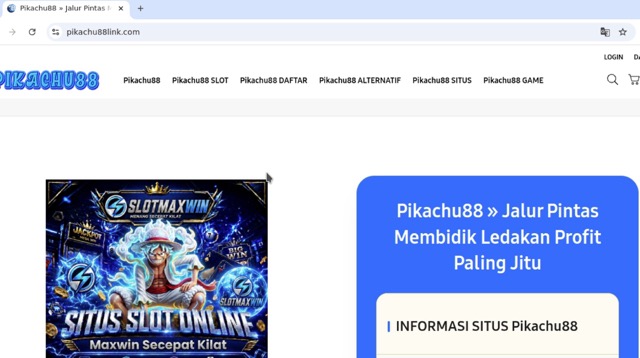
The domain pikachu88link[.]com illustrates how Pokémon-related branding can be repurposed for gambling promotion and traffic monetization. Rather than impersonating official Pokémon properties, the operator incorporates the highly recognizable “Pikachu” name into a gambling-focused platform branded as Pikachu88, featuring slot gaming, registration pages, alternative access portals, and betting-related content.
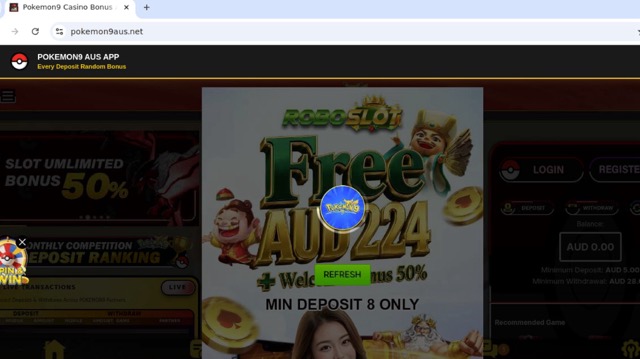
Another notable example pokemon9aus[.]net demonstrates a more localized variation of Pokémon-themed gambling abuse, combining franchise-related branding with explicit references to the Australian market. The website promotes gambling and slot gaming services through Pokémon-inspired branding while offering localized incentives including deposit bonuses, promotional rewards, and account registration workflows.
Use of Pokemon themed infrastructure and slot based domains exploits Pokémon brand recognition to drive traffic especially when anniversary-related searches and discussions would peak in recent times amongst fans. Users, thinking this as a “new” entertainment opportunity might be exposed to unregulated gambling services that can lead to credential harvesting or payment fraud campaigns.
Pokémon-Themed Meme Coin Infrastructure
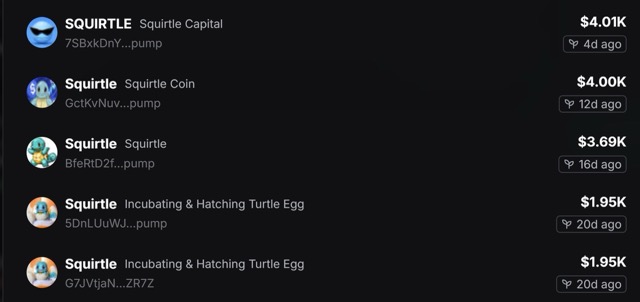
The observed example combines Pokémon-based popular character “Squirtle”, with cryptocurrency and meme coin branding to promote a token project operating within the Solana ecosystem. Terms like “Squirtle on Solana” and “Memes on Squirtle” are prominent cases where threat actors and opportunistic operators increasingly blend popular entertainment franchises with speculative cryptocurrency narratives.
Crypto-promotions are often short-lived malicious campaigns, especially around popular global announcements, capitalize on community enthusiasm, viral social media trends, and fear-of-missing-out (FOMO) investment behavior. Younger audiences, already active in gaming, NFT, and meme coin communities, are likely the target audience for such campaigns.

Further investigation identified multiple recently created cryptocurrency tokens leveraging the Squirtle character name and imagery across different coin names. The observed tokens were launched within a relatively short timeframe, suggesting sustained interest in Pokémon-inspired branding due to their growing popularity for their 30th anniversary.
Unique Financialization of the Pokémon Brand
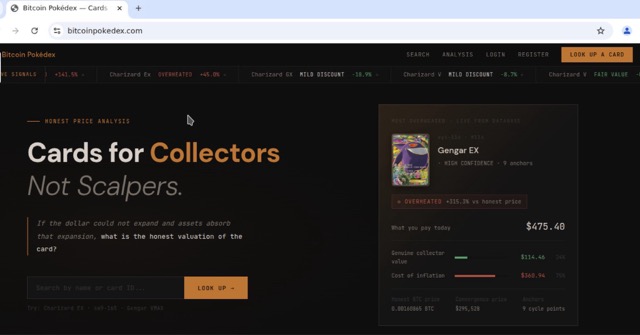
A more sophisticated blend of Pokemon cards and bitcoin was observed in this somewhat unique malicious campaign where threat actors blend collectibles, financial speculation, and cryptocurrency narratives into a single ecosystem.
Rather than impersonating Pokémon directly, the site positions itself as a niche platform for Pokémon card investors by introducing concepts such as “Bitcoin Pokédex,” targeting a highly engaged audience already familiar with scarcity, speculation, and rising card prices. By framing Pokémon cards as investment assets rather than collectibles, actors can create pathways toward cryptocurrency products, NFT projects, tokenized collectibles, wallet integrations, or speculative investment schemes.
This model focuses on:
- Pokémon Trading Cards (TCG)
- Cryptocurrency
- Alternative investments
- Market analytics
Such monetization models can lead to several threat use cases, notably towards fractional ownership of rare cards, Pokémon investment funds, tradition and premium subscription groups, eventually prompting for financial investments.
TCG & Card Grading Fraud
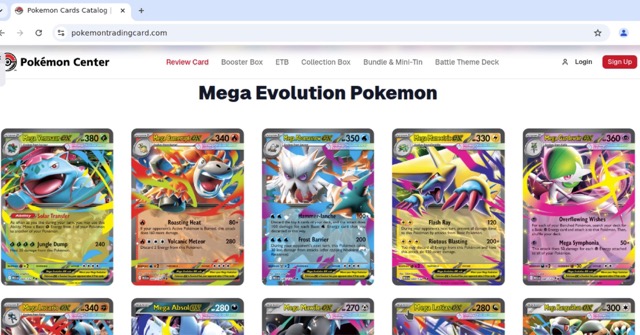
These two examples fit particularly relevant to the Pokémon 30th Anniversary (2026) threat landscape because they capitalize on renewed interest in collectible cards, reprints, and anniversary sets. Domains pokemoncarddealer[.]com and pokemontradingcard[.]com impersonates a legitimate Pokémon card marketplace, presenting itself as a premium dealer. Several persuasion techniques for the buyers are visible creating a FOMO impact such as scarcity messaging, discount indicators, and collector-focused branding.
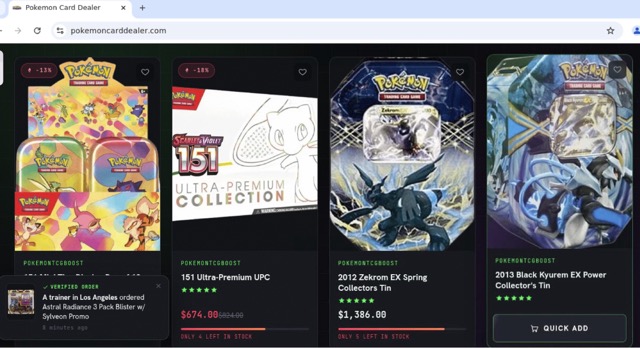
Such platforms are maybe used for harvesting payment card information, personal information, and selling non-existent inventory. Especially in the fast-spreading popularity around Pokemon’s 30th anniversary, such domains can collect advance-payment fraud. Interestingly, the use of Mega Evolution branding is particularly notable given community speculation and increased attention surrounding legacy Pokémon mechanics and anniversary-themed releases.
Misleading or Template-Based Websites
Several domains were discovered under construction indicating opportunistic domain registrations that have not yet been fully weaponized or configured for their intended purpose. Despite containing strong Pokémon Trading Card Game (TCG) branding in the domain name (pokemontcgshopjp[.]com), the hosted content currently displays what appears to be a generic e-commerce template.
These are frequently observed in registered infrastructures where:
- unfinished infrastructure is awaiting future deployment
- template-based website construction prior to adding Pokémon-themed branding
- bulk domain acquisition campaigns before deciding which assets to operationalize
The inclusion of the keyword “TCG Shop JP” is particularly notable, as Japanese Pokémon products often come at premium prices and are highly sought after by international collectors. Domains of this nature can quickly pivot into fake storefronts, anniversary merchandize shop, or Japanese-exclusive product impersonation.

Pokémon Giveaway Themed Domains
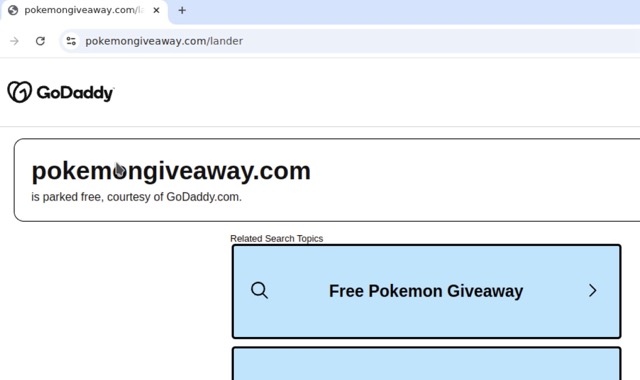
The domain pokemongiveaway[.]com is noteworthy because it directly aligns with one of the most successful social engineering themes used across gaming, fandom, and collector communities: free rewards and giveaways. While in a “parked” state, such domains are often registered months before activation and later repurposed during major events.
Alternatively, parked domains can actively run email-enabled social engineering where domains containing “giveaway” terminology are ideal for creating fake reward redemption portals. Potential objectives include credential harvesting, payment card collection, shipping fee fraud, or account takeovers.
Pokémon-Themed Investment Ecosystems
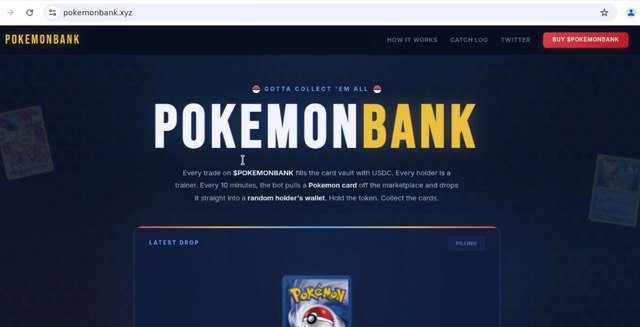
Unlike traditional phishing pages or fake merchandise stores, the site presents itself as a Pokémon-backed token ecosystem which becomes particularly relevant given Pokémon’s upcoming 30th Anniversary. In this case, “PokemonBank” reframes Pokémon cards from collectibles into perceived financial assets, positioning the platform less as a fan project and more as an investment vehicle.
The automated reward mechanism mirrors reward systems commonly found in loot boxes, casino jackpots, lottery systems etc. Since users do not know when they will receive a reward, their uncertainty increases engagement and retention, similar to gambling mechanics. Such campaigns can future provoke users to:
- Connect wallet to receive cards
- Verify eligibility or identity
- Redirect to another fake drops
Content Hijacking and Malvertising Delivery Chain
In this interesting chained example, a sports-themed article, used for unrelated advertisements, deceptive alerts and potentially unwanted software promotion, was placed as a final redirection after victims click on the initial lure pokemonromhacks[.]com. At the final destination site, a prominent pop-up claiming “Online Protection Disabled” and urging users to renew a security license. Multiple unrelated advertisements are also embedded within the article content. Users are prompted to click advertisements, install software, enable browser notifications, or follow additional redirects.
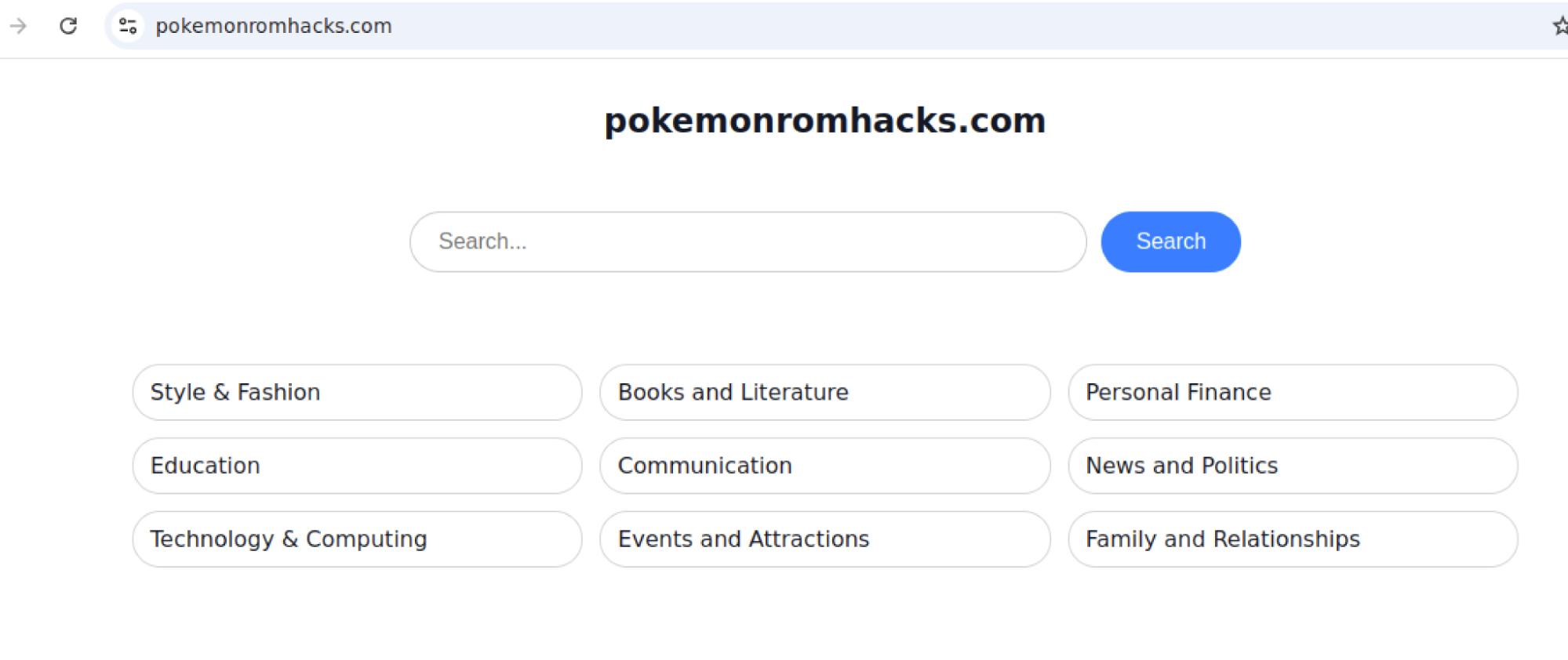
Such events often link one global event to another (here FIFA World Cup 2026) where existing traffic is repurposed towards:
- advertising fraud,
- browser-notification abuse,
- affiliate monetization, or
- dynamically delivered scam content
Such domains acquire traffic through search poisoning, ad abuse, email or SMS lures, where instead of delivering a payload immediately, victims are redirected into an advertising ecosystem where every click generates revenue.
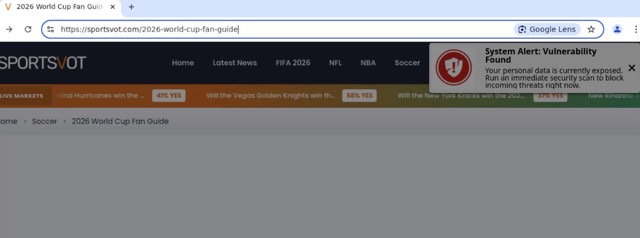
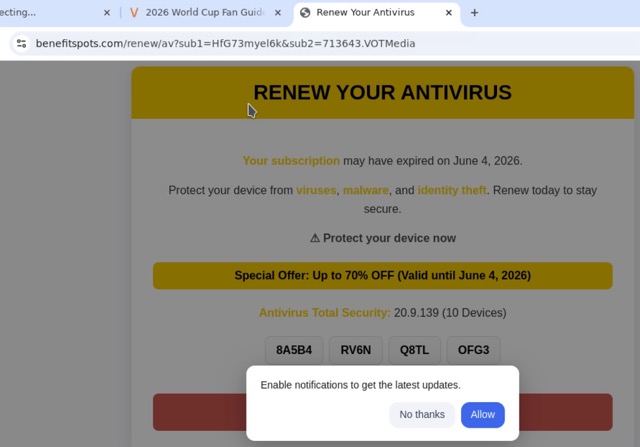
The observed redirection chain ultimately transitions away from the Pokémon-themed lure and lands on a browser notification scam / fake antivirus renewal ecosystem. To summarize, this multi-step malvertising campaign starts with Pokémon infrastructure to acquire a target audience (collectors, children, gamers, or anniversary enthusiasts), where it waits for potential victims to interact with the fake advertisements, keeping suspicious users away.
What Comes Next: Pre-Crime Threat Forecast for Pokémon's 30th Anniversary
The campaigns observed indicated a potential evolution beyond traditional phishing and counterfeit merchandise campaigns toward a multi-stage monetization ecosystem, where Pokémon characters, collectibles, fan engagement, and nostalgia are largely repackaged into investment-themed opportunities. Rather than relying on credential theft, adversaries promote assets, tokens, launch reward programs, trading platforms, card valuation services, and community-driven investment schemes.
As Pokémon’s 30th Anniversary approaches in 2026, increased consumer interest and media may create favorable conditions for threat actors to blend legitimate fan activity with speculative financial narratives.
BforeAI’s PreCrime Intelligence platform detects staged domain infrastructure during the registration phase – before phishing campaigns launch. If your brand operates in gaming, entertainment, or collectibles, see how early-warning threat detection works →
Who Is at Risk: Consumers, Collectors, and Children
If executed on a large scale, users can be impacted through:
- Financial losses through fraudulent investment opportunities impersonating Pokémon-related assets.
- Cryptocurrency wallet compromise via malicious token sale or NFT-style platforms.
- Credit card and login account theft through fake card marketplaces and merchandise stores.
- Long-term trust erosion within Pokémon fan communities and collector ecosystems.
- Increased exposure of minors and younger audiences to financial scams through gaming-related branding.
User Precautions
If you happen to interact with any domain that seems to be suspicious or guaranteed phishing campaign:
- Do not invest in Pokémon-related assets promising falsified returns, passive rewards, or guaranteed appreciation.
- Verify card marketplaces and collectible vendors through official community channels before making purchases.
- Avoid connecting cryptocurrency wallets to investment or token platforms without independent verification.
- Treat “limited-time anniversary drops,” “exclusive collector rewards,” and “free card giveaways” as high-risk social engineering themes.
- Verify domains carefully, especially those combining Pokémon terms with keywords such as bank, vault, token, capital, coin, marketplace, fund, invest, or rewards.
- Monitor for unusual requests involving wallet connections, seed phrases, card ownership verification, or advance payments.
Conclusion
Historically, cybercriminals have followed consumer attention, global events, and media coverage around popular incidents. As Pokémon enters its 30th Anniversary cycle, the combination of nostalgia, enthusiasm, new launch of collectibles, and digital assets presents an attractive environment for threat actors. The current domain landscape predicts early signs of infrastructure that could fuel campaigns where Pokémon-themed branding is used not only for phishing and counterfeit sales, but also for financial exploitation disguised as fandom participation.
Frequently Asked Questions: Pokémon Domain Threats
How many fake Pokémon domains were registered in 2026?
BforeAI tracked 1,352 suspicious domains targeting the Pokémon brand between March and May 2026 (roughly 385 new registrations per month during peak staging activity).
What do attackers do with fake Pokémon domains?
Threat actors use them for six primary purposes: credential harvesting, counterfeit merchandise sales, trading card fraud, illegal gambling platforms (primarily in Southeast Asia), mobile app spoofing (Pokémon GO clones), and cryptocurrency meme coin scams.
Why is Pokémon's 30th Anniversary a cybersecurity risk?
Major brand anniversaries drive surges in consumer searches, media coverage, and product launches, all of which threat actors exploit by staging lookalike domains in advance. PreCrime domain data shows a coordinated registration surge aligned with the 2026 anniversary cycle.
What registrars do attackers use to register fake Pokémon domains?
GoDaddy (191 domains) and Namecheap (158 domains) were the most abused registrars, followed by Spaceship Inc (78) and Cloudflare Inc (60).
Are children at risk from Pokémon-themed cyber threats?
Yes. Threat clusters including Indonesian gambling networks using Pikachu branding and Pokémon GO spoofing tools exploit content that surfaces in child-oriented searches and app stores, creating direct child safety risks alongside fraud risks.